
Are Heat Pumps Noisy? Air Source Heat Pump Noise and MCS 020 Explained
Before an installer drills the first fixing, several decisions have already shaped what neighbours may hear from a domestic air source heat pump. The unit, its operating load, its position, surrounding surfaces and connections all affect its acoustic impact. So, are heat pumps noisy? Heat pumps are not inherently noisy, although poor siting and installation can make an otherwise suitable unit intrusive.
Kimber Acoustics, led by Robert Kimber MIOA, assesses plant noise and vibration for proposed installations and existing concerns. This guide explains what homeowners, installers, developers and affected neighbours can learn from the standard MCS 020 calculation, and when a more detailed noise assessment is appropriate.
If a unit is already installed and the sound has become a problem, the same factors help explain why, and the steps to take are set out below.
How Noisy Are Domestic Air Source Heat Pumps?
People often want a simple decibel comparison. That can mislead because the sound heard at a neighbour’s window is different from the sound power value declared for the unit. Distance, walls, corners, barriers and operating conditions all change the result.
The character of the sound matters too. A University of Salford study asked participants to evaluate simulated indoor heat-pump noise at different distances and operating powers through a partially open window. In these worst-case scenarios, around 5% rated the sound as highly annoying (salford.ac.uk), while most reported low-to-medium annoyance.
The study also found that sudden changes, including transitions from defrost to full power, produced greater annoyance than steady operation. Tonality and roughness were nearly as strongly associated with annoyance as overall sound level. Quieter night-time backgrounds provided less masking, so the same source could be more noticeable.
That evidence gives a measured answer. Many installations can have a modest acoustic impact, while sound character, timing and local context still deserve attention. Kimber’s Noise Surveys & Noise Assessments establish evidence when a general product figure cannot answer the site-specific question.
What MCS 020(a) Checks in England
MCS 020(a) predicts whether a domestic air source heat pump meets the permitted-development noise limit at relevant neighbouring assessment positions.
For installations assessed under permitted development in England, MCS 020(a) Issue 1.1 is the current sound calculation. The 2025 amendment order (legislation.gov.uk) sets out the updated planning rules.
The MCS 020(a) standard (mcscertified.com) tests a calculated sound pressure level against 37.0 dB LAeq,5mins at the assessment position, ignoring the effect of the façade. That position is one metre outside the centre of a door or window to a habitable room at a neighbouring property. The limit is a planning test at that location. It isn’t the sound power rating of the heat pump itself.
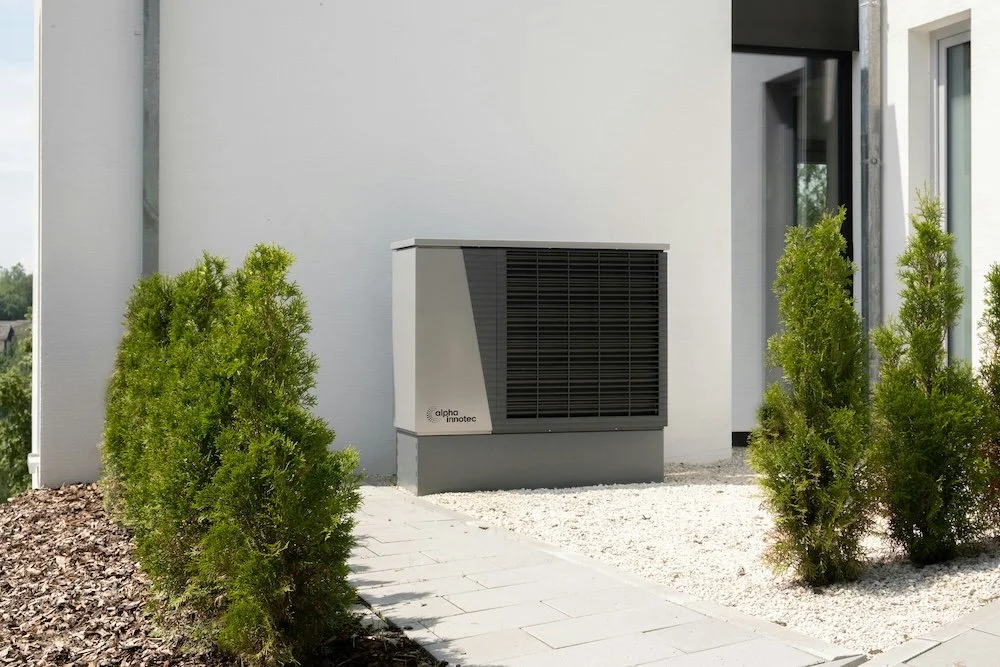
Good acoustic planning begins before the installer fixes the unit in place.
The desktop calculation uses:
the manufacturer’s A-weighted sound power level, excluding a low-noise mode value
the distance between the centre of the unit and each relevant assessment position
the directivity factor created by nearby reflective surfaces
any permitted correction for a solid barrier and the actual line of sight
the combined contribution where two heat pumps share an assessment position
Several positions may need checking because the nearest window isn’t always the worst affected. A more distant bedroom window with a clear line of sight may receive more sound than a closer opening screened by a suitable wall.
England’s permitted-development rules have allowed heat pumps within one metre of a property boundary since May 2025, subject to the remaining conditions. The Warm Homes Plan explanation (gov.uk) confirms that change. Removing a fixed boundary distance makes accurate equipment data and site geometry more important, especially in compact terraces and courtyards.
Where the Desktop Calculation Reaches Its Limit
MCS 020(a) answers a defined planning question. It uses manufacturer data and site geometry to predict compliance with the permitted-development noise limit. It doesn’t measure the existing sound environment, verify that the installed arrangement matches the calculation assumptions, assess structure-borne vibration or resolve why a particular sound has become disturbing. Compliance with the calculation does not, by itself, determine whether an installed heat pump is causing a statutory nuisance.
When More Detailed Work Is Proportionate
More detailed work can be proportionate when the layout is constrained, several windows need consideration, reflective surfaces surround the unit, or the proposal falls outside permitted-development criteria. It may also be needed when a planning authority requests evidence, multiple plant items operate together, a neighbour has raised a concern or operating behaviour such as cycling, defrost transitions, or sustained high output needs to be understood.
Kimber first reviews the unit data, installation position, MCS calculation, relevant receiver positions and site geometry. That review establishes whether the question can be answered by prediction alone or whether representative measurement is needed.
An environmental noise survey establishes representative background conditions, often including the LA90 background sound level. A professional noise assessment then considers the proposed or existing source against the relevant criteria and context. These are separate tasks. Measurements create the evidence base, while the assessment supports a planning, design or complaint-response decision.
How BS 4142 Adds Context
Where appropriate, BS 4142:2014+A1:2019 provides methods for rating and assessing industrial and commercial sound at residential receptors. The standard considers source characteristics and context as well as measured background sound. The British Standards Institution overview (bsigroup.com) explains that the method covers tones, impulsive sound and the influence of context.
On a complex, high-density site, a legal boundary line tells the project team very little about reflection, line of sight, operating state or the receiver’s sound environment. Applied acoustic prediction and, where justified, representative measurement provide the missing evidence. The appropriate scope depends on the decision that evidence must support. Kimber’s Acoustic Consultants for Noise, Vibration & Building Acoustics can review that scope without assuming every domestic installation needs a full survey.
Installation Details That Change the Noise Impact
Good acoustic planning begins before the installer fixes the unit in place. The selected position can improve one receiver while worsening another, so drawings should show nearby doors and windows on every relevant elevation.
Five practical factors deserve review:
Plant selection. Compare the correct sound power data for the proposed model and design duty. The heat pump should normally be assessed at its maximum relevant sound output over the reference period because it may operate continuously or for prolonged periods. MCS 020(a) says a low-noise mode value must not be used in its calculation.
Position and orientation. Greater separation usually reduces sound pressure, while a clear line of sight can make a receiver more exposed.
Reflective surfaces. Ground, walls and tight corners can increase directivity. A seemingly sheltered recess may create a less favourable calculation.
Screening or enclosure. A barrier must be solid, continuous and positioned to interrupt line of sight if it is to provide useful airborne attenuation. Any enclosure also needs to remain compatible with airflow, access and manufacturer requirements.
Vibration isolation. Anti-vibration mounts and flexible pipework connections interrupt the structure-borne path between mechanical equipment and the building.
The fifth point is easily missed because a fence or acoustic screen treats sound travelling through the air. It can’t interrupt vibration already entering a wall, floor or supporting structure. Kimber Acoustics specifies suitable isolation mounts and flexible connections where the design requires them, addressing the transmission path directly.
Plant-noise work follows the same principle across different sources. In The Old Pumping Station – Substation Noise Assessment, transformer noise was a planning issue for future occupants and required a defined assessment. The equipment differs from a heat pump, while the need to connect source data, transmission paths and receiver conditions remains relevant.
What to Do When an Installed Heat Pump Sounds Too Loud
Start by recording when the sound occurs, where it is most noticeable and whether it is steady, tonal, rattling or linked to a change in operation. Note weather conditions, time of day, open or closed windows and whether vibration can be felt through the building. Short recordings can help describe the event, although phone audio isn’t a substitute for calibrated measurement.
Ask the installer to confirm that the unit, controls, mounting and pipework match the documented installation design and manufacturer requirements. A temporary change during a defrost cycle may have a different cause from a persistent hum or structure-borne vibration.
If the concern remains, Kimber can review the unit data, installation position, MCS calculation and relevant receivers. Kimber Acoustics can be instructed by affected neighbours as well as by owners, installers and developers. Depending on the question, the next step may be a focused site review, baseline noise monitoring, source measurement, acoustic prediction or a BS 4142 assessment. The resulting evidence can help an owner respond to a complaint, an affected neighbour understand the source, or an installer and developer identify proportionate mitigation.
Choosing the Right Acoustic Scope
Domestic heat-pump advice sits within Kimber’s wider plant-noise and vibration work, with each enquiry reviewed and scoped by Robert Kimber MIOA. He retains senior oversight from survey planning through assessment, reporting and final technical advice.
A desktop review may be enough when the unit data, distances and geometry are clear. A site visit or detailed assessment becomes more useful when information is incomplete, transmission paths are uncertain or the output must address planning or an existing complaint. This proportional approach keeps the work tied to the actual decision.
Related acoustic services answer different questions. Construction Noise Monitoring concerns noise and vibration during works, while an Occupational Noise & Vibration Assessment considers employee exposure. Neither replaces an assessment of domestic heat-pump noise at a neighbouring home.
Common Questions About Heat Pump Noise
Are Heat Pumps Noisy for Neighbours?
Sometimes. The outcome depends on sound power, operating condition, separation distance, reflective surfaces, screening, vibration isolation and the position of neighbouring windows or doors. An MCS 020(a) pass addresses the permitted-development noise calculation. A constrained site or existing concern may justify a more detailed assessment.
Why Is My New Heat Pump So Loud?
Check whether the sound occurs during high output or a defrost transition, then ask the installer to review the mounting, pipework, controls and operating condition. Reflections, clear line of sight and structure-borne vibration can increase what you hear. Persistent, unusual or intrusive sound warrants a site-specific investigation.
Plan the Acoustic Detail Before Installation
Early review leaves more practical options. Plant selection, location, orientation, screening and vibration isolation can be coordinated before remedial work becomes necessary.
For a proposed installation, send Kimber Acoustics the site address, plans, heat-pump model and sound data, proposed location, separation distances and neighbouring window positions. For an existing concern, include the operating pattern, where the sound is heard and any MCS calculation, planning information or previous report. Kimber can then recommend a proportionate scope and explain what the resulting evidence will support.