
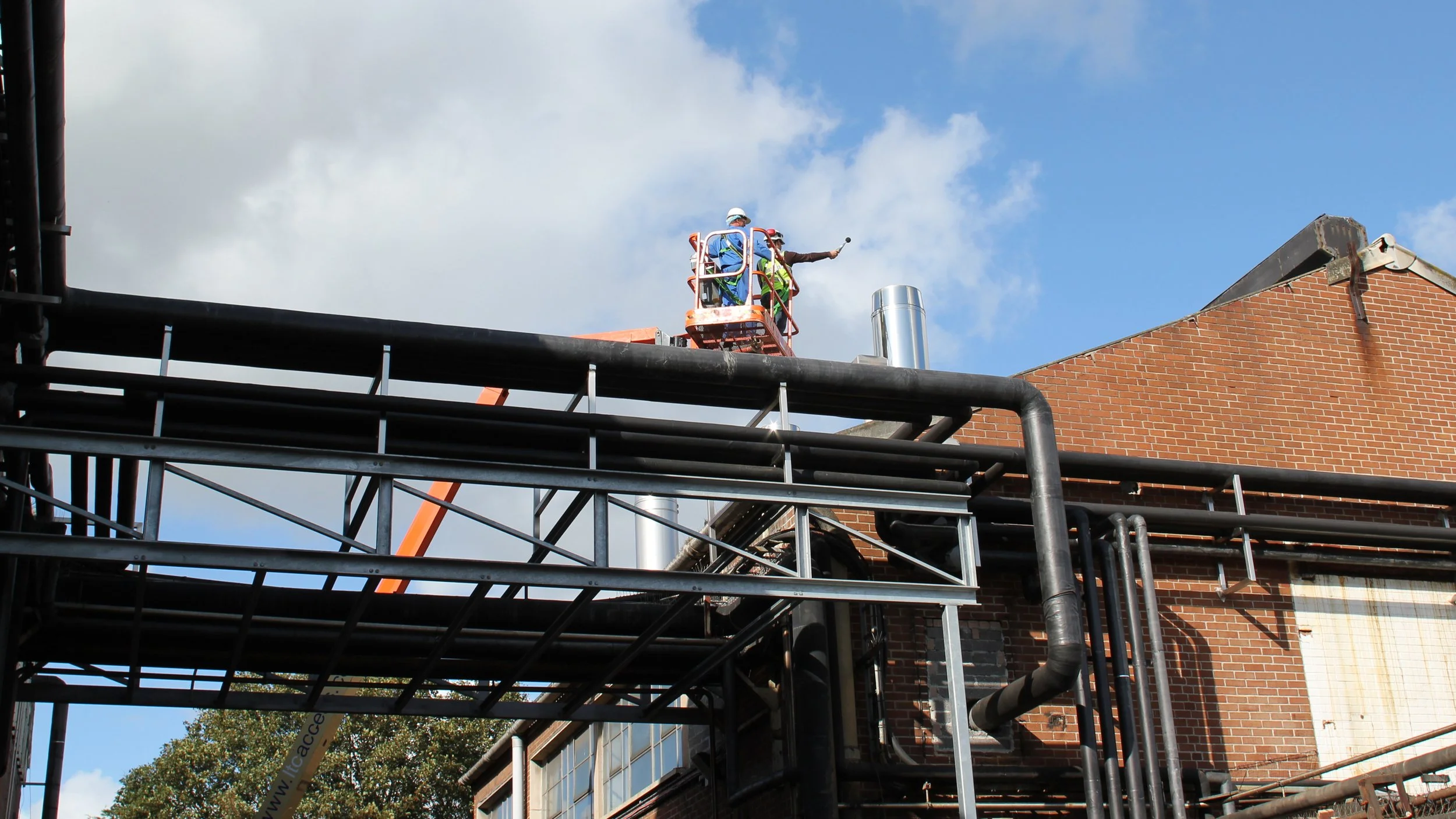
Industrial Acoustic Advice
Industrial Acoustic Advice
Industrial activities generate continuous, tonal, and sometimes impulsive noise and vibration from plant, processes, and vehicle movements. When not properly assessed and controlled, these effects can impact neighbouring land uses and trigger planning objections, enforcement action, or statutory nuisance investigations. Industrial acoustic advice identifies the dominant sources, operating patterns and nearby noise-sensitive receptors so that potential impacts can be addressed at an early stage.
Industrial developments may therefore be subject to close scrutiny through planning, environmental permitting, and environmental health processes. Acoustic performance is a material consideration in securing consent, maintaining compliance, and protecting operational continuity. Where applicable, industrial and commercial sound is assessed in accordance with BS 4142:2014+A1:2019.
Why Industrial Acoustics Matter
Industrial noise and vibration may be assessed at site boundaries and at nearby noise-sensitive receptors. Even small changes in plant operation, layout or duty cycle can alter off-site effects significantly. Facilities often operate over extended hours, and characteristics such as tonality, impulsivity, intermittency or low-frequency content may require particular attention.
While planning approval and initial compliance are essential milestones, industrial sites commonly evolve over time. Changes in process, throughput, equipment, maintenance or operating patterns can introduce new airborne-noise and structure-borne vibration risks that were not present at commissioning. Without robust acoustic design and evidence, operators may face complaints, enforcement action or restrictions on use.
Early, proportionate acoustic consultancy helps establish which sources and receptors govern the design. That understanding can inform practical solutions through site layout, plant selection, enclosures, barriers and isolation measures before they become difficult to change. It creates a clearer reference point for later operational decisions, so a proposed change can be assessed against the consent, permit and performance expected in use.
Explore our work
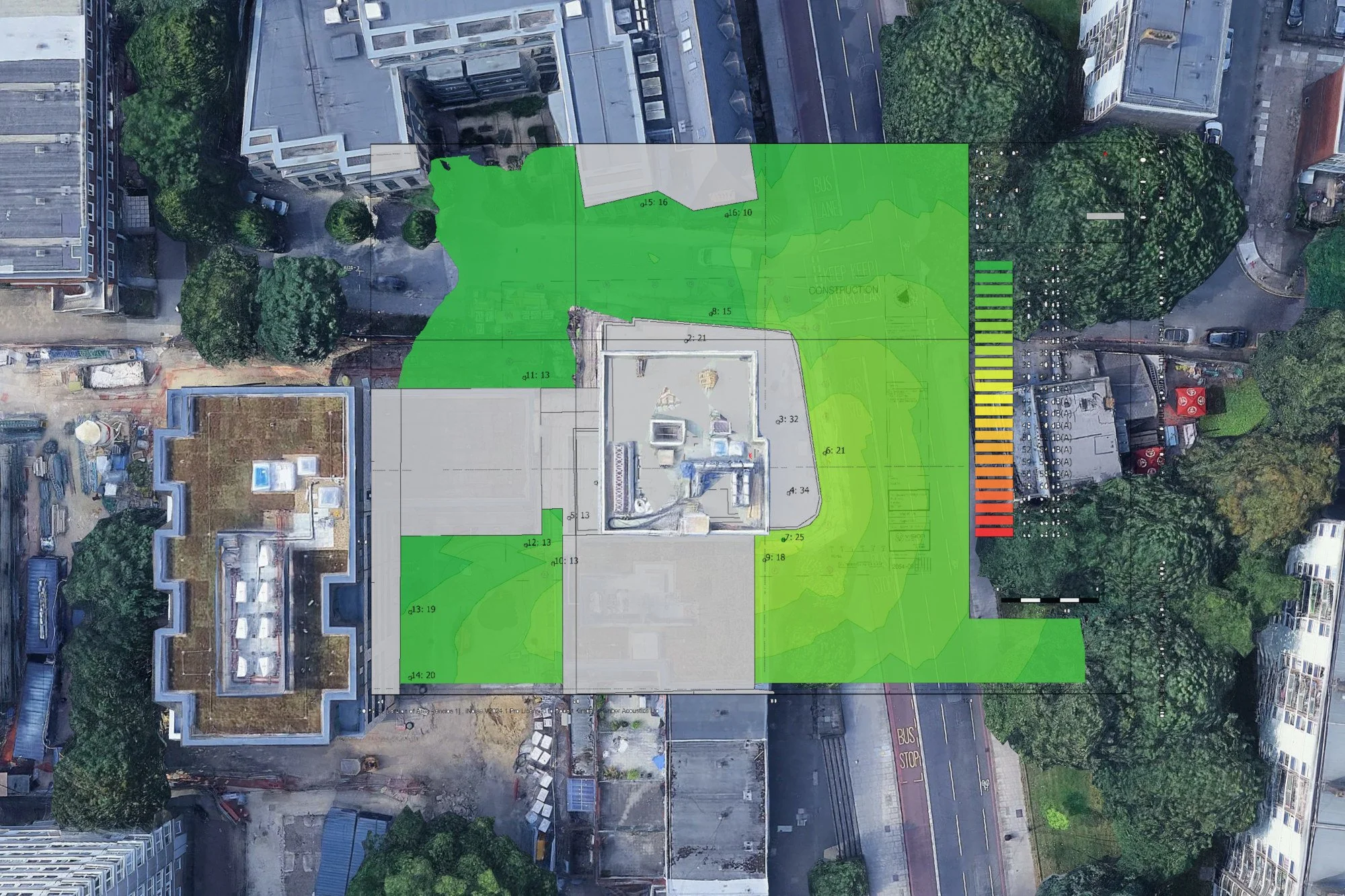
How We Typically Support Industrial Projects
Industrial projects can require acoustic input at several defined stages. The appropriate scope depends on the process, plant, operating pattern and surrounding receptors.
Planning and permitting noise assessments
Noise and vibration assessments can support planning applications, environmental permit applications and permit variations. Where applicable, industrial and commercial sound is assessed in accordance with BS 4142:2014+A1:2019 by comparing the rating level with the representative background sound level at nearby dwellings or residential premises.
The assessment considers acoustic characteristics such as tonality, impulsivity and intermittency, together with context and uncertainty. Separate assessment methods and criteria may apply to vibration. Environmental permit applications may also require a Noise Impact Assessment (NIA) and a Noise and Vibration Management Plan (NMP)
Design-stage acoustic and vibration control advice
Acoustic input during design supports the selection and layout of plant and buildings, together with measures such as acoustic enclosures, silencers, attenuators, barriers and vibration isolation, to control airborne noise and structure-borne vibration from industrial processes.
Post-installation and compliance support
Following installation or modification, acoustic testing can assist in verifying that the completed construction or installation conforms to the project specification and can provide evidence against planning conditions, permit requirements or other applicable criteria.
Operational noise control and monitoring
During operation, acoustic monitoring can support planning or permit compliance and assess proposed or actual changes in process, machinery, throughput or operating patterns. Monitoring can identify changes in the dominant noise source or vibration transmission path and inform proportionate noise control measures. Where necessary, the same evidence can also support regulatory enquiries or complaint investigations.
Identifying the relevant stage and decision keeps the scope proportionate. It allows industrial noise and vibration risks to be addressed before they lead to enforcement action, operating restrictions or retrofit measures, while leaving a useful evidence base for future changes in use.
Early identification of the relevant stages can reduce the risk of enforcement action, operational restrictions and costly retrofit measures as industrial sites develop over time. It also creates a useful evidence base for assessing future changes in use or operation.