
The Hidden Risk in Reusing Façade Design on Residential Schemes
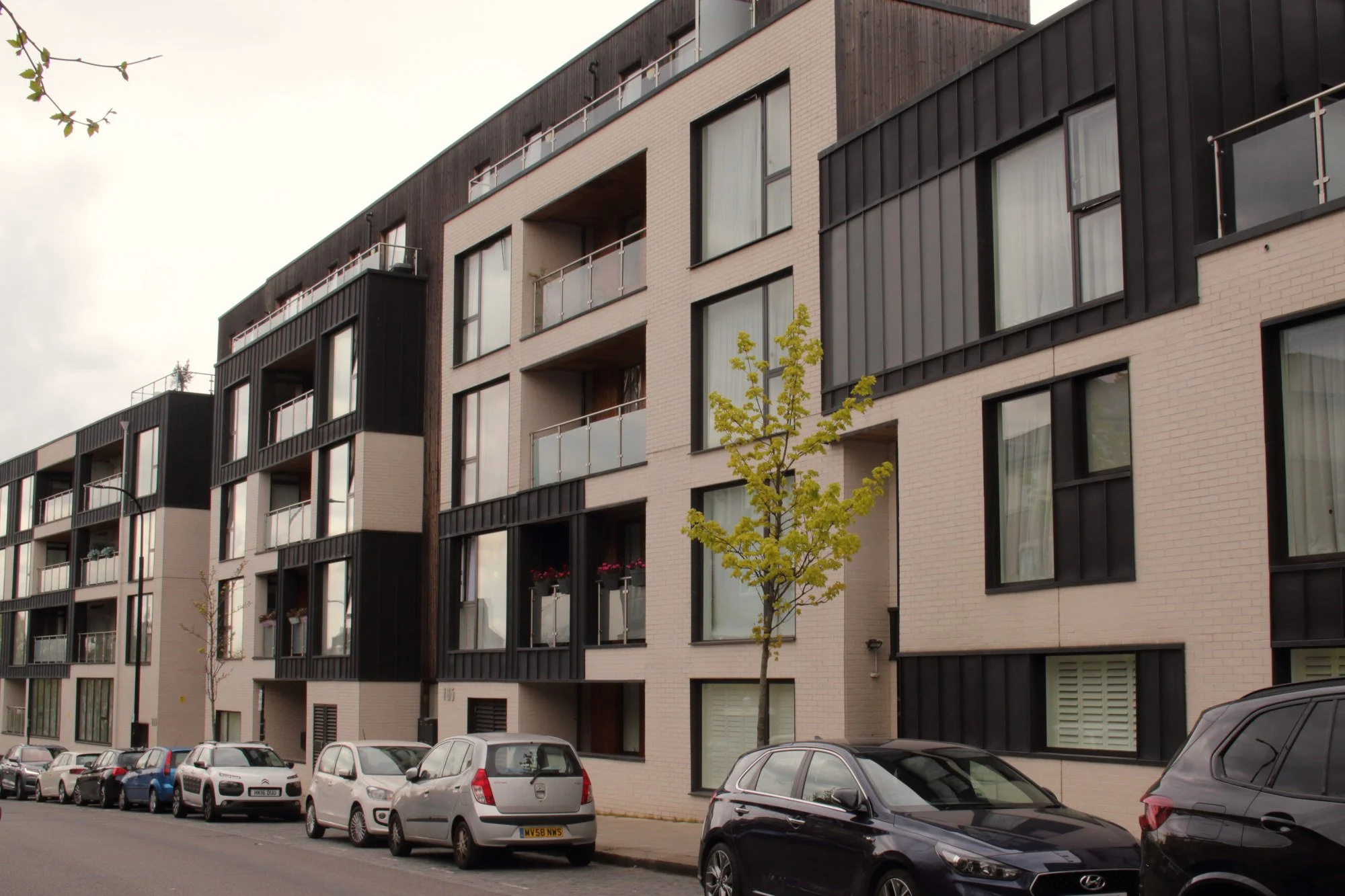
A residential apartment building with road traffic and railway traffic exposure
Why copied façade details can become a false economy when night-time noise events drive the real design constraints
Reusing façade design from an earlier residential scheme can be a sensible and efficient part of the design process. The detail is familiar, the specification may already have been through planning and technical review, and carrying it forward can help save time and consultant cost at a stage when programmes are already under pressure. There is nothing inherently wrong with using precedent, but it works best where the assumptions behind that precedent are checked against the acoustic, thermal and operational conditions of the new site.
That point is easy to overlook. The façade detail itself may appear entirely reasonable, with a glazing build-up that looks robust, a ventilation strategy that has worked elsewhere, and window arrangements that seem consistent with normal residential design practice. The difficulty is simply that façade performance is influenced by more than the visible detail, so differences in night-time noise profile, overheating exposure, site orientation, façade shielding or realistic window-use behaviour can lead to a different outcome from one scheme to the next.
That matters because external noise and overheating are closely linked in residential design. A strategy that appears technically sound when considered only as a façade specification may need a second look once the design team asks whether occupants are likely to keep windows open during warm nights, whether bedrooms are exposed to repeated maximum noise events, and whether the ventilation concept still works if that window-use assumption proves optimistic. The question is not only whether a window can open, but whether an occupant would realistically choose to leave it open at night once the sound environment is experienced from inside the room.
Why reused façade design often makes commercial sense
It is easy to see why design teams reuse façade strategies. A previous scheme may have secured planning, passed technical review and progressed through procurement without any obvious acoustic difficulty, which naturally makes the same approach feel lower risk than starting again from first principles on every residential project. From a commercial perspective that logic is entirely understandable, because precedent can reduce design time, simplify coordination and give the wider team confidence that the proposal is broadly deliverable within a familiar cost envelope.
In many cases, that approach is appropriate. Reusing details can be an efficient part of design development, particularly where teams are working repeatedly in similar sectors and under similar planning conditions. The point is simply that a façade strategy is rarely governed by one variable alone, and once the site noise climate, façade orientation, room arrangement, overheating exposure, ventilation assumptions and local authority expectations begin to diverge, it is worth checking whether the same solution still fits the new scheme as well as it fitted the last one.
Why a road that feels quiet on site can still be misleading
A road can feel relatively quiet when standing on site. Traffic may seem light, there may be gaps between vehicles, and the general daytime impression can be that the acoustic environment is not severe enough to justify much concern, particularly when compared with a busier main road or a more obviously exposed urban frontage. It is entirely understandable that this kind of first impression can make a familiar façade strategy feel proportionate.
That impression can still be incomplete. Residential design is not governed only by how a site feels during a short visit, but by how the sound environment behaves over time, especially during the hours when occupants are trying to sleep and are more sensitive to repeated disturbance. A road that seems quiet in general terms can still generate occasional heavy vehicle pass-bys, motorcycles, buses, late evening arrivals or other distinct events that matter more to bedroom window use than the broad daytime character of the site might suggest.
That is often where a more site-specific review becomes helpful. A previous scheme may have appeared comparable because it also sat beside a road that was not obviously busy, but if the pattern of night-time disturbance is different then the assumptions behind the earlier glazing, ventilation and window-use strategy may need to be adjusted. The issue is not that precedent should not be used, but that a calm on-site impression is not always enough on its own to confirm that the same design response will remain suitable.
The risk does not end at handover
The commercial implications do not necessarily stop once a condition has been discharged or the building has been handed over. A façade strategy may have been accepted on paper, installed on site and signed off through the planning process, but the underlying assumptions will still be tested once residents begin occupying bedrooms through warm nights and living with the building in real conditions. If those assumptions turn out to have been too optimistic for the site, the issue may only become fully visible after occupation, when complaints, management involvement and remedial discussions become more difficult and expensive to address.
That is why this issue is best treated as part of good project coordination rather than as a narrow compliance exercise. This does not require design teams to abandon precedent or start again from first principles on every project. It requires a proportionate, site-specific review early enough to confirm whether the assumed façade, ventilation and window-use strategy remains credible on the new development. Where that happens, precedent can still be used efficiently, but with less risk of redesign, delay, post-completion dissatisfaction and avoidable commercial exposure.
In practical terms, this usually means a focused review of the relevant façades, bedroom orientations, ventilation assumptions and likely night-time noise behaviour before the design is fixed too far downstream. That is often a relatively modest exercise compared with the cost of revisiting glazing, ventilation or layout decisions later in the programme.
Condition discharge may close the planning file, but it is not always the end of the commercial consideration.